
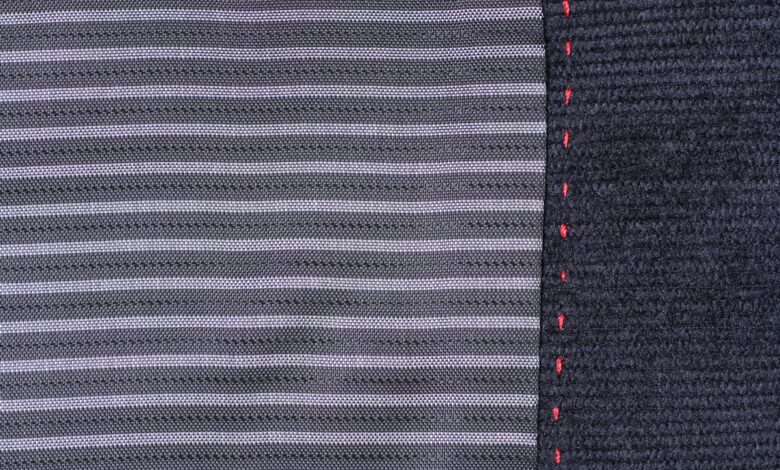
Percale and sateen are two types of cotton fabrics that can be produced using identical cotton fibers and other raw materials but differ in how they are woven. The weave type determines the overall comfort or firmness of the bedding, how shiny or dull it will appear, and how well it will resist snagging and washing. While you may assume that percale sheets are cooler than sateen sheets, this is not necessarily true based solely on the weave types.
In a controlled lab comparison, researchers discovered that the satin weave circulated more air than the plain weave; however, the opposite holds true for both products when comparing them based on their respective slogans. Despite being produced in a similar manner by way of the cotton fiber used, it is important to note that cotton sheets purchased at retail locations may vary significantly from one seller to another, which can greatly impact the final price point and the overall consumer experience.
What Percale and Sateen Actually Are: Two Weaves, Not Two Fabrics
All woven fabrics are created with two layers of yarns which cross one another at right angles. In a woven fabric, the lengthwise yarns are referred to as ‘warp’ and the crosswise yarns are referred to as ‘weft’. the pattern formed when these two layers of yarn cross, is referred to as the ‘weave’ of the material. There are only two terms which define these different woven patterns – percale and sateen. The Consumer Reports ‘Buying Guide’ clearly states that both of the above terms simply refer to the weave of the threads used in creating a cotton fabric, and do not indicate that any of the fabrics have different materials.
Percale is a type of weave which is primarily a plain weave. A plain weave refers to the manner in which the warp and weft yarns alternately cross over and under each other, thereby locking the two yarns together at every intersection of the warp and weft. The Consumer Reports ‘Buying Guide’ has classified percale as a one-over, one-under grid weave and in its 2020 Textile Review defined percale as a plain weave which is comparable to muslin and voile.
Sateen belongs to the satin family. In a satin weave, a yarn passes over four or more crossing yarns before being tied down by one. The stretch of yarn lying on the surface is called a float. Cotton Incorporated’s reference site CottonWorks says satin weaves have “long warp or filling floats,” which give the cloth its flat, shiny surface. The same 2020 review says the name changes with the fiber: it’s “satin” with filament fibers like silk and “sateen” with short-staple yarns like cotton.
There is no universal agreement amongst sources on the orientation of the floated yarns in sateen bedding. Consumer Reports has indicated that the floated yarns in sateen bedding are the horizontal threads, whilst Pratt claims the floated yarns are the warp yarns. The best definition for the floated yarns would be that a minimum of one layer of yarn floats over a minimum of several of the other layers of yarns.
The fiber portion of a fabric label is separate from all the rest. According to Consumer Reports, cotton has short-staple, long-staple, and extra-long-staple classes; Pima and Egyptian cotton are two common examples of extra-long-staple cotton. Any of these types of cotton can be woven into either percale or sateen, so the term “Egyptian” refers to the type of cotton, not the way it is woven.
Yarn density is the third variable, which is defined by the new ASTM method known as end (warp) and pick (filling) count. The older term for this is “fabric count,” but the standard for fabric count is per centimeter, whereas the per-inch number is provided for informational purposes. In the United States, this is commonly referred to as the thread count. According to the staff at the Federal Trade Commission (FTC), multiplying the yarn count by the number of yarns plied together is likely to be misleading to consumers. The FTC provided the following example of an honest labeling practice: a sheet labeled as having “300 thread count, two plies,” rather than “600.” The yarn ply and thread count need to be treated as separate guides, but are part of the weave.
You can touch and feel a sheet. According to Pratt’s laboratory, satin-weave fabrics have a shiny side and a matte side, so if you gently flip a sateen sheet over you should see this transition. In contrast to Pratt’s take on satin-weave, Wirecutter’s bedding reporter describes percale as a sheet with an appearance resembling the latticework of a pie crust when viewed up close, like the lattice on a pie, and a glossy face and a dull back.
How the Weave Changes How It Feels
The variability in the texture of a woven fabric, whether it is a “crisp” or a “silky” texture, relates directly to how often the individual yarns are sewn in (or “pinned”) into place. In Limeneh and colleagues‘ 2020 study, they examined several types of fabrics with the same number of warp ends and picks (20 ends/cm. ~ 51 ends/in, 40 picks/cm. ~ 102 picks/in), and all had approximately the same weight (165 g/m²/4.9 oz/yd²). They found that the simplest type of weave (i.e., 1/1 “plain weave”) was the stiffest in both vertical and horizontal directions, whereas satin weaves with a 4/1 ratio of warp/float were the least stiff. Based on the results of their study, the authors concluded that “the stiffness of fabric is determined primarily by the fabric’s weave, specifically the number of binding points,” or the locations on the yarn where the different yarns cross each other.
More crossings mean that each of the yarns bends less freely, resulting in crispness, while fewer crossings with longer floats create drapery. The limitation to this finding is that the materials used in the study to test this conclusion were intended to represent apparel-weight fabric, rather than sheets sold at retail. Therefore, while the results of this study may indicate the direction of the relationship between fabric type and stiffness, they are not representative of the strength of this relationship for a specific sheet set.
Sheen is generated by the same type of structure of fabric. Satin type weaves appear shinier because the relatively flat floats of the fabric allow for a less-scattered light reflection, because light doesn’t scatter as much, whereas plain type weaves have many more surface crossings (resulting in matte appearances as a result of the many small crosses).
The differences so far as product testers describe them relate to the feel of the fabric on the bed. A reporter from Wirecutter reports having tested 43 sets each of sateen and percale sheets. According to the reporter, percale has a stiffer hand and tends to sit more on top of the body than other fabrics, while sateen has a ‘body-hugging drape’ and wraps around the contours of the sleeper’s body. While some people may appreciate the way sateen ‘bunches’ around the body, many others do not due to its clingy nature and the fact that sateen generally has a slightly shiny finish that some people may not like.
While the weave creates the primary characteristics of each type of sheet, both the type of fiber and the finishing process impact those characteristics. Consumer Reports has found that long-staple cotton sheets will typically be softer, stronger, and have less tendency to pill than shorter-staple cotton sheets. The Wirecutter identified one choice of an organic sateen sheet that was less silky than the other organic sateen selections, attributing this to the use of shorter-staple cotton and not applying the same finishing treatment used on the other sheets. In addition, Wirecutter explained that most sheets that are sold have some type of treatment performed to them prior to being sold, such as mercerization, and recommends that consumers wash new sheets once before use. Sheets that have just come from the packaging will feel different after being laundered.
The feel of a sheet can change significantly over time. Wirecutter’s top-rated percale will initially feel very soft, but after some use, it will develop even more softness. On the other hand, the same reporter states that many inexpensive percale sheets can become rough and wrinkly after only a couple of washes. Therefore, while most percale sheets can expect a general increase in softness as they are used, none can be relied upon to stay silky after repeated use.
Is Percale Actually Cooler? Weave Structure and Airflow
The term “cool” can actually refer to three different things, and how percale or sateen fabrics rate as “cool” differs for each of those.
First, there is the immediate sensation of the sheet on your skin or contact area when you first touch it (this is referred to as qmax). According to the NC State Wilson College of Textiles, the contact area affects the sensation of “coolness” because of the shape and texture of the sheet, largely depending on the contact area between skin and fabric; however, it is not a good indicator of how warm you will feel sleeping under a duvet after sleeping with one for an hour.
Second, “cool” can also refer to the amount of airflow that passes through the fabric. Third, there is insulation. The Limeneh study performed measurements for both air permeability (ASTM D737) and thermal resistance (ISO 11092) to determine these properties. At the same yarn density and weight, the 4/1 satin fabric had greater air permeability, greater water vapour permeability, and less thermal resistance, when compared to the 1/1 plain weave. The authors attribute this difference to the “compact/packed structure” of the plain weave. Thus, when taking only the weave type into account, there is no evidence to suggest that percale fabrics are inherently more breathable than satin fabrics.
So what is the reason for so many testers feeling that percale fabrics are cooler than satin fabrics? Wirecutter explains that the reason for this lies in the construction process. Due to the unique over-under pattern of percale fabric, it has less room between each set of fibres, so percale’s over-under pattern leaves less room to squeeze in extra strands, making it necessary for the sheets to be made from a lower number of threads; thus, they tend to weigh less than satin fabrics. Conversely, because there is more space between each set of fibres on the satin fabric’s over-under pattern, it can have more yarns packed together, meaning that it typically weighs more. In the Wirecutter guide, an 800-thread-count satin sheet set was described as “too thick, overly warm” while a lighter-weight 680-thread-count satin sheet set was described as “not too hot.”
The combined analysis of the two elements discussed above shows that the difference in warmth between percale and sateen is primarily due to the higher density and weight that the sateen weave provides, rather than the amount of float used in creating the fabric.
This makes the determination about whether percale fabric is cooler a “conditional” statement . A comparison of the lighter and lower thread count of percale to the heavier, higher thread count sateen will support the recommendation of percale fabric for hot sleepers by Wirecutter, as well as by numerous other testers of bedding materials. The recommendation for percale and linen for hot sleepers by Wirecutter, as does the recommendation for percale by other bedding product testers, is based on the premise that percale has a lighter feel and lower thread count.
It must be noted that there are many factors that contribute to how hot or cool a person sleeps. How the fabric is made, the weight and density of the fabric are key indicators. Not all sheets created from the weaves will provide the same level of comfort to every sleeper. For example, in the r/Bedding thread asking whether sateen sleeps hotter, one respondent reported that he swapped his sheets at the onset of a heat wave and found that the sateen was “MUCH HOTTER” than the percale he had used previously. Another thread in the same r/Bedding linked to a respondent who reported that his wife, who sleeps “REALLY HOT”, was comfortable using sateen.
Due to the construction of percale and sateen, the determining factors for hot sleepers are actually fiber content and fabric weight. Consumer Reports recommended using 100 percent cotton over “cotton-rich” blends as a better choice because of its breathability and those who sleep on the hotter side will benefit from this aspect of the fabric.
How Each Weave Wears Over Time
The strength of sateen also serves as a disadvantage because of the floats’ size. According to Pratt’s lab, satin weave has a tendency to snag easily due to the large floats much easier than other weaves because there are many larger floats. When you have a lot of battening down the middle of the fabric that isn’t as tightly woven to the warp, it is easier for a pet’s claw, rough heel, or even hook-and-loop fastener to catch on these long stretches of yarn versus a tightly woven grid. One reader of the related r/Bedding subreddit mentioned that every sateen set they’d owned had pulls from their dogs. This is just one person’s experience, but it seems to support the theory behind it.
The same principle applies to abrasion. When comparing two cotton materials that were woven in the same manner using the ASTM D4966 Martindale Method of Abrasion (cotton shirting), [weaves with long floats and few interlacings lost the most mass] (46 ends per cm by 28 picks per cm, approximately 117 by 71 inches) had the greatest amount of loss in mass during abrasion testing. The satin material experienced a 9.6% loss in mass after 15,000 cycles of rubbing, while the material with the most interlacing points had approximately a 6.4% loss. According to the author, the longer floats spread the contact area of the yarn, making it easy for the agitation to pull the fibers from the yarn. Also, according to a study published in 2025, at the same thread density, [weaves with more interlacing points hold fibers more securely] than the weaves that had less interlacing points. Neither study examined sheets, so both studies should be looked at as demonstrating a structural trend, not a quality of life expectancy.
While weave is an important factor in determining pilling, there is additional information on underlying fibers that also impact pill resistance. Long-staple cotton fibers appear to be less likely than short-staple to pill and the amount of twisting in plied yarns plays a role, therefore it is important to know the ply disclosed previously. An example from the r/Bedding thread about pilling illustrates the interaction of weave, the experience of one user with a 400-thread-count sheet that started pilling after 3 gentle washes. Another user noted her sheets pilled as a result of being washed and dried together with towels. These posts exemplify individual experiences.
While some sheets might look and feel the same because they share the same weave, there can be significant variation between sheets. The investigative reporter from Wirecutter had five finalists from this year’s test and washed each one five times while examining the fibers under a pick glass. There were some sateen sets that felt rough or “fuzzy” after five washes while other sateen selections held up for years, including a 400-count set that the Wirecutter according to the reporter has been remarkably durable since purchasing it in 2017. Although percale generally wrinkles much more than sateen, otherwise, the care instructions for each weave are identical. The type of fiber, yarn, and finishing quality must be taken into consideration along with how the sheet was woven to understand how well it will hold up over time.
Shrinkage is also a common concern for both types of weave. Consumer Reports tested cotton sheets and reported shrinkage of up to 6% [shrink up to 6 percent] after undergoing more than 20 washes resulting in some fitted sheets being unable to fit onto their respective mattresses. Consumer Reports findings apply to all cotton sheets, not just those made in a particular weave.
Matching the Weave to How You Sleep
The evidence in the previous sections is compiled into one single table below. The one connection not reported by any of the sources reviewed here is sleeping position; therefore, that column will be left empty.
| Trait | Percale | Sateen |
|---|---|---|
| Weave structure | Plain weave: one over, one under, locked at every crossing | Satin family: yarns float over four or more before being tied down |
| Surface and handfeel | Crisp, stiffer, rests on top of the body | Smooth, drapey, settles around the body; some find it clingy |
| Sheen | Matte | Faint gloss on the face, dull back |
| Warmth | At equal construction, less air-permeable than satin; as sold, usually lighter and recommended for hot sleepers | At equal construction, more air-permeable; as sold, often denser, heavier, and warmer |
| Snag and abrasion | More interlacings hold fibers more securely | Long floats snag more easily and lose more mass under abrasion |
| Wrinkling | Typically wrinkles more | Wrinkles less, partly helped by finishes on some sets |
| What to check on the label | Fiber staple, thread count with ply | Fiber staple, thread count with ply; very high counts point to heavier, warmer cloth |
| Sleeper-fit note | Suits people who like a crisp, cool-feeling sheet, sleep warm, or share the bed with clawed pets | Suits people who like smoothness and drape, sleep cool, or want a cozier sheet in colder months |
Viewing the warmth row as a general tendency based on the way sheets are constructed, rather than a characteristic of each weave, will help you interpret the warmth of your sheets. Just because you sleep hot but prefer sateen, doesn’t mean that you should be limited to heavier, high-count sateen. The same is true for cooler sleepers who like to sleep on crisp sheets; a heavier percale is an acceptable choice. These recommendations come from the evidence above, rather than from tests.
You do not have to make a choice and stick to one type of sheet for the entire year. According to one writer for Wirecutter, she wears sateen and flannel from October to March, but will often transition into sateen-in-springtime mode by wearing her sateen sheets into April or May. Therefore, having two sets of sheets (one sateen and one flannel) and changing them out each season is a very simple way of addressing this issue.
The One That Matters
The weave of a fabric is a reliable indicator of how it will feel (for example, does it have enough “give” when it stretches or pulls), but does NOT necessarily tell you anything more than how much warmth the product may provide compared to what the marketing materials claim. What does determine how much warmth a product may provide? In addition to texture (feel), one of the best resources for comparing the weight/durability of different sheets is to examine the content of the fiber (i.e., the fiber staple length), as well as the number of threads per inch and whether the yarn used is single- or double-ply. Consumer Reports advises that any new set of sheets should be washed prior to being used; washing will likely produce shrinkage, and if you don’t wash first, you may not get the same level of crispness or silkiness as when the product was purchased, and returning sheets that shrink or feel wrong after washing, and if you skip that step, the crisp or silky feel you paid for may not be the one you end up sleeping on.
Frequently Asked Questions
Is sateen the same as satin?
The same family weaves all four textile papers. One textile paper uses “satin” for filament types like silk or nylon and “sateen” for short-staple spun yarns such as cotton. Therefore, when referring to cotton sateen, the structure is borrowed from satin, but the fiber base is cotton.
What thread count should I look for in each weave?
Wirecutter’s rule of thumb is roughly 200 to 300 threads per square inch for percale sheets and 300 to 600 threads per square inch for sateen sheets. However, regardless of how many threads you see, make sure that you see the ply count stated. The FTC staff called a count doubled for two-ply yarn likely misleading.
Which wrinkles more, percale or sateen?
According to Wirecutter‘s findings, Percale is almost always smoother than sateen. The reason for this disparity is that Wirecutter found that one percale set remained wrinkled after being washed in a dryer. The discrepancy becomes a great deal more complicated because some sateen sets have had their smoothness enhanced by treatment for anti-wrinkle effects; therefore it is necessary to wash new sheets before making a comparison.
