
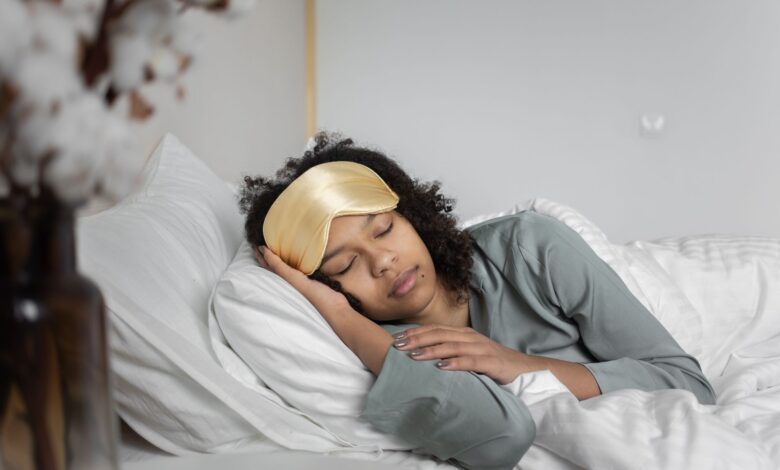
“At Night, Your Body Intentionally Cools Itself Down.” As evening approaches, your body’s internal temperature begins to lower, and warm blood starts to flow toward your extremities where it can escape from your body. This is a major reason why a warm bedroom interferes with sleep. The latest research about body temperature and sleep, including a review of thermoregulation published in 2020, indicates that you start to experience this drop in body temperature several hours before your usual bedtime.
There are two important points to understand about how coolness affects sleep. First, the definition of “Cool” and “Cold” is not the same. Second, the air in your bedroom is different from the warm pocket of air underneath your covers. A human-centred review indicated that bedding and clothing alter the effects of coolness and coldness on sleep. All information regarding physiological responses is general, and should not be utilised for medical advice. The process starts with your body’s nightly temperature curve.
What Happens to Your Core Body Temperature During Sleep
Your core body temperature follows an expected pattern while you sleep. It begins to cool down in the evening according to your internal clock, and after you start to fall asleep, it reaches a low temperature (the lowest point) during the night. Your core temperature will gradually increase again before you wake up, while your skin temperature decreases much earlier than core body temperature.
Core temperature is the temperature inside of your body and is located in the deeper tissue layers (the core). The temperature of your outer body layer(s) (the skin) responds to both the room’s environment and the amount of blood flow close to the surface of your skin. Generally, the temperature of your skin is typically around 4 degrees Celsius (about 7 degrees Fahrenheit) cooler than that of your core. Skin temperature can change significantly as blood flow and sweat change.
Your body has an inherent ability to maintain a consistent temperature. For example, if you were to stay in a laboratory and be kept from eating, sleeping and doing anything during that entire time, your core temperature would still experience a normal 24-hour cycle. The amplitude, which amplitude runs about 0.8–1.0°C, represents the variability in temperature from the average base line (24-hour average), typically ranging from approximately 0.8–1.0 degrees Celsius, or approximately 1.4 to 1.8 degrees Fahrenheit. The term amplitude refers to the amount of temperature drop below the average baseline and does not represent the total change in temperature during a full cycle. Even patients who remain inactive in a hospital on bed rest maintain their daily cycle of approximately 1 degree Celsius.
The sleep-wake cycle is independent of the circadian clock. The same study found that, approximately two hours prior to any individual going to sleep, their core temperature will begin dropping according to their circadian rhythm. The drop in core temperature is steepest within the first non-REM cycle. Additional studies have shown that, when the relationship between the circadian clock and sleep-wake cycles were disrupted, core temperature dropped with every transition to the first non-REM stage.
Low points’ position isn’t constant and varied from study to study depending on experimental conditions. In one metabolic-chamber study of young and older women, the lowest hourly average came in the second hour after bedtime. The same paper notes that long-term real-life recordings show variation between individuals, with the low point sometimes arriving in the second half of sleep. Hand and foot skin temperature also runs on its own timing: its daily rhythm is shifted about 100 minutes earlier than the core rhythm, with a larger swing. During ordinary nighttime sleep, human core temperature eases down by about 0.3°C at most.
Where the low point lands isn’t fixed. In one metabolic-chamber study of young and older women, the lowest hourly average came in the second hour after bedtime. The same paper notes that long-term real-life recordings show variation between individuals, with the low point sometimes arriving in the second half of sleep. Hand and foot skin temperature also runs on its own timing: its daily rhythm is shifted about 100 minutes earlier than the core rhythm, with a larger swing.
The nightly temperature rhythm, phase by phase
The Data Table below displays this finding, but it does not represent your own curve. The data points on this table are relative to habitual sleep patterns—not clock time.
| Phase | What core temperature does | What hand and foot skin does | Source notes |
|---|---|---|---|
| Evening, roughly two hours before habitual sleep | Begins declining under circadian control | Vessels in the hands and feet start widening, observed up to two hours before the first sleep episode | Harding et al., 2020; Harding et al., 2019 |
| Sleep onset | Decline is at or near its steepest; first non-REM sleep is likeliest here | Rising hand and foot temperature is a prominent feature; extremities warm until they match the torso | Szymusiak, 2018; Harding et al., 2020 |
| Early to middle sleep | Continues easing down; timing of the low point varies by person and conditions | Hand, foot, and torso skin stay warm | Okamoto-Mizuno and Mizuno; Seol et al., 2023 |
| Before waking | Begins to rise toward daytime levels | In three pre-industrial societies, waking coincided with narrowing of finger blood vessels | Seol et al., 2023; Harding et al., 2019 |
Why Core Body Temperature Drops Before Sleep — and How Your Body Does It
As you prepare to sleep, two things happen that result in a decrease in your body’s core temperature; the first is that your body produces less heat because you’re relaxing and settling down, and the second is that your body loses temperature through the process of dilating blood vessels in the skin—primarily in the extremities (hands and feet). It may seem contradictory to have warm hands/feet when going to bed, but in reality, having warm extremities is part of the way that your core body is cooled.
In his comprehensive review of research on sleep (Szymusiak et al., 2018), Dr. Szymusiak explains that during sleep and rest, the body’s metabolic heat production decreases due to several factors, including reduced muscle activity and relaxation, and shifts within the autonomic nervous system. Additionally, the nervous system relaxes the action of vasoconstriction (narrowing), allowing greater amounts of blood to flow into the skin and lose heat, which raises the skin temperature at distal sites (e.g. hands/feet).
Your hands and feet are built for cooling down, due to the high density of capillaries and arteriovenous connections (short-cut passages between arteries and veins), along with the smaller volume-to-surface area ratio. When the signaling for narrowing of the blood vessels ceases, heated blood from the core flows into your skin, only to be lost from the skin. The blood flow can rise rapidly and dramatically when the body needs to dump heat.
The active dilation of blood vessels, also known as vasodilation, occurs just before falling asleep. A study in Nature (1999) revealed that how much vessels in the hands and feet dilated was the best physiological predictor of falling asleep quickly. While a predictor does not equate to a causal factor, it does indicate that there’s a strong relationship between losing heat and falling asleep.
The warm-bath paradox
A 2019 systematic review and meta-analysis of 17 articles confirmed the findings from the 1999 Nature study when it found 13 of the studies associated with water-based warming (40-42.5 °C / 104-108.5 °F) created better self-reported quality and efficiency of sleep. Additionally, warming could cause you to go to sleep at a faster rate if used one to two hours prior to bedtime for a minimum of 10 minutes; the meta-analysis also reported that warm water bathing can decrease the time it takes for you to fall asleep by about roughly 36% shorter.
The authors of the meta-analysis concluded that the level of blood flow to the palms and soles is a driving force of both increasing the amount of heat lost to the surrounding environment, as well as enhancing the decrease in internal temperature. They also noted that there is a lack of research available regarding optimal timing and duration for using any type of warm water immersion prior to going to sleep.
However, research has also suggested that other body parts can also be involved in speeding up the falling asleep process. For example, in a laboratory study conducted on 16 older adults, increasing the temperature of the torso and thighs by just 0.4 °C (approximately 0.7 °F) shortened time to sleep. In contrast, warming the distal body areas (e.g., feet and hands) did not reduce the time taken to fall asleep in this particular study; the authors also noted that both of their distal warm conditions may have produced a warming effect in participants.
On the brain side, an area called the preoptic hypothalamus helps control both sleep and body temperature. Warm-sensing neurons there switch on at sleep onset, and some of them respond more strongly to skin temperature than to core temperature. Most of the detailed circuit work comes from mice. One review also cautions that body and brain cooling haven’t been shown to start non-REM sleep on their own. Read the temperature drop as a companion of sleep onset rather than a switch.
Why a Cool Room Helps — and What “Cool” Actually Means
When it’s cooler in your bedroom than outside, your body can lose heat to the ambient air. Warm, humid air acts as an impediment to your body’s natural cooling mechanism, and during periods of high core temperature, the ability to lose heat diminishes. However, even if the air temperature is cool outside, this is just one element of creating a “cool” environment. The skin temperature, as well as the temperature beneath coverings, impact your total sleep time as well. Air that is cooler may not necessarily enhance the quality of your sleep, however; too little heat loss due to ambient temperature can interrupt sleep cycles and reduce total sleep duration.
Also, humidity affects your body’s ability to lose heat through sweating; therefore, in humid conditions (hot weather), sweating is less effective at helping to cool the body after the core temperature has reached its peak. A systematic review of 2024 studies found that higher outdoor temperatures and higher indoor temperatures are negatively correlated to higher-quality sleep and greater amounts of sleep. The study found that, in hot weather (July, August, and September), and in at-risk populations living in warmer regions, the effect of temperature on sleep was greater. Warm surroundings hold back heat loss through the skin, which blunts the normal fall in core temperature.
The thermoneutral zone helps define “cool.” It’s the range of surrounding temperatures where your body can hold its core temperature with only small blood-flow adjustments, without shivering or sweating, and with minimal energy use. For people lying semi-nude in a lab, the thermal neutral point was about 29°C (84°F). Temperatures above or below it added wakefulness and cut into deep and REM sleep.
The bed covers are warmer than most rooms but account for much of the temperature differences. According to another study, the temperature between the sleeper’s body and the bed cover typically varies from 32 to 34 degrees Celsius (90 to 93 F) at 40% to 60% relative humidity while sleeping. In a related study, individuals were exposed to air temperatures between 19 and 21 degrees Celsius (66 to 70 F) and developed skin microclimates around 31 and 35 degrees Celsius (88 to 94 F); these researchers found that raising air temperature to 19 degrees Celsius (66 F) does not replace the skin microclimate.
Adding both sets of information together suggests the definition of cool as the combination of two areas: outside the cover, it is cooled air and inside the cover is an adjustable pocket of warmth in contact with the sleeper. Studies of people using bed linens or sleeping in clothing usually do not show [no significant difference in sleep] at various air temperatures (13 to 23 degrees Celsius [55 to 73 F] or 3 to 17 degrees Celsius [37 to 63 F]), but sleeping conditions were kept consistent in the studies. In general, when the air temperature is decreased below 23 degrees Celsius (73 F), a reduction in the core temperature of an individual still occurs.
The distinction between the air and the bed-surface temperatures is frequently made in the real world. One Reddit poster reported an increased amount of deep sleep when they cooled their bedroom to 66 to 68 degrees Fahrenheit (approximately 19 to 20 degrees Celsius), but they did not provide details about how deep sleep was measured. A different user described the cooling effect as, “the A.C. cools your bed.” Two other users disagreed about whether a cool room is necessary for the cooling effect to work. This thread cannot offer a final answer to that question.
Research in laboratories shows that the surface beneath you is part of your thermal environment. Data pooled from 72 participants at three different sites showed that using a high-heat-capacity research mattress to draw heat away from the back increased slow-wave sleep by an average of 7.5 minutes over 7.5 hours when compared to not using a mattress.
Warm Room vs. Cold Room: How Each Affects Sleep Stages
The temperature of a room has different effects on the various stages of sleep depending upon how the sleeper is covered. In terms of bedding alone — e.g., bed sheets, comforters, etc. — heat has a much greater negative effect on sleep than does cold air. In other words, when exposed to warmer air at night, one will tend to wake up more (i.e., have more time awake) and experience less slow-wave and rapid eye movement (REM) sleep. This is particularly true during the early portion of the night. Cold temperatures with an adequate thermal barrier did not disrupt the sleep stages, but they did disrupt the heart-rhythm measurements, meaning the ambient temperature under which the sleep was occurring did not correlate with sleep quality.
To put it another way, the different types/stages of sleep are as follows: Non-rapid eye movement (NREM) sleep contains a number of different levels, including the deepest level (i.e., slow-wave) and the level most associated with dreaming (REM). The results of the study about the influence of the thermal environment on human beings are significantly affected by the clothing worn and the bedding used. For those participants in this study who were nearly naked during sleep, the cold temperature disturbed their sleep more than did the warmer temperature. Under natural conditions of sleeping with covers and clothing, the warmer temperature had the most negative impact on sleep.
In addition, the negative influence of the warmth of the environment on the sleep stages was concentrated during the first half of the night; therefore, even after five consecutive nights of sleeping in a warm environment, the sleep disruption did not decrease. However, during humid warm conditions in the early portion of the night, the amount of slow-wave sleep was shortened and the amount of time awake was increased. Thus, the authors concluded that wakefulness is the one state where thermal comfort provides an advantage (a state that welcomes heat) and replace deep sleep or REM sleep.
There is a difference in the way that cold interacts with sleep. In experiments with partially clothed subjects, the effects of cold were most evident during later periods of the night when the majority of REM sleep occurs. When there is bedding and clothing, the effects of cold do not seem to affect the same phases of sleep. However, the study found a large difference in the patterns of heart-rate variability measured during the lighter and deeper stages of non-REM sleep, as the air temperature went from 17c to 3c (63f to 37f). The authors of the review believe that because people do not recognize that cold affects sleep, they may not realize that it has an impact.
Why REM sleep is the odd one out
The ability to tolerate heat and cold differs between non-REM and REM; but, in rodent laboratory studies, body temperature isn’t regulated during REM sleep. In humans, it is not as straightforward as that; we still sweat during REM, although to a lesser degree than when we are awake. An additional finding from the human-focused study on sleep was that the onset of sweating occurred later than in non-REM and that the amount of sweating during REM was also lower, and that shivering was only occurring in the lighter stages of sleep.
When taken together, it would seem that we are less able to adjust to an uncomfortable sleeping environment when we are in REM. That could explain why some people wake up feeling too hot or cold in the middle of the night, but we cannot show this as a definitive diagnosis. One Reddit poster shared on reddit that they knew of the “pre-sleep temperature drop” and described the way they go through their hot/cold dance within the first few hours of sleep. They guessed that temperature regulation was affected during different stages of sleep cycles. Their guess somewhat aligns with the information regarding REM sleep, but we cannot definitively determine what caused the problem.
Where popular claims and the studies part ways
Cleveland Clinic sleep psychologist Michelle Drerup says heat is “a huge disruptor” for REM sleep. The human review reaches a different emphasis. It notes that hot, humid conditions of 32°C (90°F) at 80% humidity affected only slow-wave sleep and left REM alone. Its authors suggest heat hits deep sleep first, while REM may be well preserved in real-life conditions. Both sources agree heat harms sleep. They disagree about which stage takes the first hit.
There is less evidence that “Colder is always better” than there is for “Heat impacts our sleep more than cold does.” Drerup also explains that when we experience cold temperatures, our bodies narrow our blood vessels, causing our heart and blood vessels to work harder. This correlates to the research of the human trial showing that when a person exposed to cold temperatures, their heart-rhythm changes.
What the key studies actually tested
Each of these studies, being relatively small in size and containing varied methodologies means that we should be cautious before making definitive decisions about the findings of each based solely on these studies and what their respective headlines indicate.
| Study | Who was studied | What was changed or compared | What it measured | Main finding | Limit to keep in mind |
|---|---|---|---|---|---|
| Okamoto-Mizuno and Mizuno, 2012 | Healthy younger and older adults across the authors’ lab studies | Dry heat, humid heat, and cold, with and without bedding | Sleep stages, core and skin temperature, heart-rhythm measures | With bedding, heat added wakefulness and cut slow-wave and REM sleep, mostly early; cold left stages intact but shifted heart-rhythm measures | Narrative review drawn largely from the authors’ own work |
| Ko and Lee, 2018 | Six young men | Bed socks vs. none at 23°C (73°F), 50% humidity | Wrist actigraphy, rectal and skin temperature | Fell asleep 7.5 minutes faster, slept 32 minutes longer, 7.6% higher efficiency; no significant core temperature change | Very small sample; wrist movement data, not brain recordings |
| Raymann and Van Someren, 2008 | Eight older good sleepers and eight older adults with insomnia | Thermosuit nudged skin and core temperature within a comfortable range | Time to fall asleep in daytime lab tests; comfort and temperature ratings | Torso and thigh skin warming of 0.4°C sped sleep onset; the insomnia group barely noticed the temperature changes | Daytime lab naps; small groups |
| Haghayegh et al., 2019 | 17 studies, 13 pooled | Warm bath or shower at 40–42.5°C (104–108.5°F) before bed | Time to fall asleep, efficiency, self-rated quality | Faster sleep onset when done one to two hours before bed for at least 10 minutes | Authors flag limited research on timing and duration |
| Herberger et al., 2024 | 72 participants pooled from three centers | Heat-absorbing research mattress vs. regular mattress | Sleep stages, core and back skin temperature, heart rate | Slow-wave sleep up 7.5 minutes on average; more heat flowing from core to back linked to more deep sleep later in the night | Research mattress; modest average effect |
| Seol et al., 2023 | Nine young and eight older women | Overnight stay in a metabolic chamber held at 25°C (77°F) | Core and skin temperature, energy use | Older women’s core temperature stayed higher throughout sleep | Small groups; one room temperature |
| Chevance et al., 2024 | Real-world studies of adults, adolescents, and children worldwide | Outdoor and indoor temperature | Validated sleep outcomes | Higher temperatures generally linked to worse sleep quality and less sleep | Observational links; methodological limits noted |
Why “Sleeping Hot” and “Sleeping Cold” Are Not Just Preferences
Both warmth (sleeping hot) and coolness (sleeping cold) are not only personal preference issues much more prevalent in some people than others, and thus, due to physiological or hormonal reasons (such as hormonal cycles affecting our body’s core temperature), physiological reasons (aging affects how we experience both body temperature at night and how well we perceive when we are feeling either warm or cool), and different physiological reasons (two different people occupying the same bed).
Hormones have long been identified as one major factor responsible for causing these differences between individuals from their respective hormonal cycles. During a woman’s cycling through the ovulatory menstrual cycle, her core body temperature will be elevated during the luteal phase (the phase that occurs after ovulation) when compared to when she is in the follicular phase (the phase before ovulation) with a difference of approximately 0.3 – 0.7 °C (0.5 – 1.3 °F). The largest differences occur at night after the woman has gone to sleep and when she wakes up in the morning (or shortly thereafter). In menopause, hot flushes are cited by the NHS as the most common reason for experiencing “night sweats”.
Aging is another factor that can create a temperature difference between individuals. This is illustrated in the previously mentioned chamber study, where it has been shown that older women’s core temperature remained elevated throughout the night when compared to younger women. The authors of that study have referenced previous research studies that documented the gradual decline in the nightly dip in body temperature as we age. The authors refer to another study in which older adults experienced less ability to maintain body temperature when the temperature of the room was lowered from 26.5 °C (80 °F) to 20 °C (68 °F).
Older adults, in addition to having greater difficulty maintaining their body temperatures when the ambient temp drops, also would seem to have a different sensitivity to heat than younger adults. Evidence exists that older adults who can detect mild heat during sleep [added wakefulness and cut REM] sleep and wake up more often. Additionally, the researchers found that, even with the small differences in skin temperature, an older adult would [barely registered subtle changes] have difficulty recognizing the difference between the ideal sleep temperature and one that is less optimal.
Due to this uncertainty, published ranges vary. In a recent article, Drerup states that 60-67F (15-19C) [as a rule of thumb] can generally be considered to be the ideal temperature range, and anything over 70F (21C) would be regarded as “too warm.” In addition, a literature review indicated that the ideal temperature for creating warm bed microclimates is approximately [roughly 19–21°C] (66-70F). The limited overlap of both ranges occurs only at or around 66-67F, indicating that all of these values represent “guidelines” rather than “target temperatures.”
When it comes to shared beds, it makes it even harder to settle on a single “ideal” temperature because each individual has their own comfort zone. In a particular r/sleep thread, one poster mentions that her husband is “freezing to death” when the temperature is set below 66F (approx. 19C). One possible solution for this dilemma is to provide two separate bedding layers for each person; this way, each individual can have their own microclimate beneath the covers and adjust appropriately according to their respective body temperatures. However, this is merely an opinion drawn from research and not yet backed by any reproductive studies.
What You Can Actually Control at Night
When it comes to the environment of your sleep, you can adjust everything that affects your thermal environment. These factors include humidity and air temperature in your bedroom; the clothing you wear to bed; the blankets covering you; and the surface that supports you while sleeping. You do not have control over the thermal rhythm of your biological clock or the slightly impaired heating capability of your rapid-eye-movement (REM) state of sleep. Therefore, your realistic goal is to create an environmental situation in which your body has the optimum flexibility for adjusting itself thermally, thereby creating maximum comfort and promoting quality sleep.
The first lever in the process of creating your optimum thermal environment is with the use of humidity and air temperature. By restricting air temperature and increasing the humidity level in your bedroom (which slow heat loss from the skin), you can better manage the thermal environment in the first portion of your sleep. Therefore, the authors of the review recommend that those who operate their air conditioning only during the first part of the night continue to operate their air conditioning for this same duration of the evening; they also recommend that individuals who wait until later in the evening to cool their sleeping environment should dry off from perspiration prior to changing clothing to avoid an uncomfortably cold environment.
Additional factors to consider include bedding and clothing. Whereas researchers were able to maintain consistent sleep quality under varying cold air and relative humidity conditions during their lab studies using bedding and clothing that you can layer to manage the temperature of your body throughout the sleep cycle, it is important to remember that your body will also manage its own cooling (as well as its warming) during sleep. As the room heats up, we tend to uncover more body area; conversely, as the temperature of the room drops, we tend to lie on our sides more frequently, e.g., in the summer months. Utilising additional layers of bedding or clothing, in addition to providing for body cooling (or warming)
Local warmth is a third option, and preferences vary. Bed socks shortened sleep onset in one six-person study at 23°C (73°F). In a Reddit socks thread, replies split between people who need socks to fall asleep and people who can’t stand warm feet. A warm bath one to two hours before bed is another way to prime heat loss, though the best timing is still being studied. The mattress itself can also draw heat away from your body.
These factors are limited in scope. Another r/HubermanLab poster has indicated that her move to wool bedding and the use of targeted layering was “marginally more effective,” but was ultimately ineffective in extreme weather conditions. There are concerns surrounding accuracy with respect to readings taken using wearables. The authors of this study argue that skin temperature does not accurately reflect core temperature, therefore, further research is warranted into the validity of wearable temperature sensors.
It’s important to note that if you sleep at night and the room is too warm or your bedding is too warm, you may experience excessive sweating; the UK National Health Service defines “night sweats” as the level of perspiration that produces a soaked pajama top or bed sheets while sleeping in a cool room, even when the room is cool. If you have recurrent night sweats that keep you awake, cause you concern, or are associated with fever, cough, diarrhea, or unexplained weight loss, please contact your GP.
What This Means for Your Sleep
Your skin provides a source of heat exchange when your body is sleeping; therefore, by allowing your skin to lose heat through the air in your bedroom, the bedroom creates a place for this heat to dissipate without cooling you down too much. It is important to identify which specific body part feels out of balance in terms of temperature: whether you feel cold in your feet, if there is too much heat in the bedroom environment, or if there is dampness or sweat from the sheets due to heavy blankets. Each of these will indicate a different temperature adjustment requirement for optimal comfort during the resting hours. Use the thermostatic range of your home as a guide for initial adjustments, then modify according to your individual needs and the needs of your bed partner. Additionally, if you experience continual night sweats regardless of how cool your environment is, you should consult with your physician; do not continue to adjust the thermostat.
Frequently Asked Questions
Can warm feet help you fall asleep in a cool room?
Yes! The body eliminates its core heat via its hands and feet, with the average ambient temperature being around 23 degrees Celsius (73 degrees Fahrenheit). The trial at that temperature found that while there was no change in temperature after using bed socks for several nights, it did shorten sleep onset, so again, this is a matter of comfort rather than something that actually affects your sleep.
Does your body temperature always hit its lowest point at 4 a.m.?
No! When it comes to determining the lowest daily temperature for you, there are several factors that matter, including your circadian rhythm, how regularly you sleep, and how environmental conditions are measured. Experiments performed in controlled laboratories found that subjects can experience the lowest average hourly temperature in the second hour after bedtime; however, it is important to note that both men’s and women’s records differ from each other.
If you regularly wake up drenched in sweat, is the room just too warm?
When it comes to sleeping, there are many factors involved. A hot room (although warm) or using bedding that’s for warmth may cause you to be excessively hot (sweaty). If, however, you are using bedding to cool off and are not warm, the NHS recommends you seek medical advice from a GP.
