
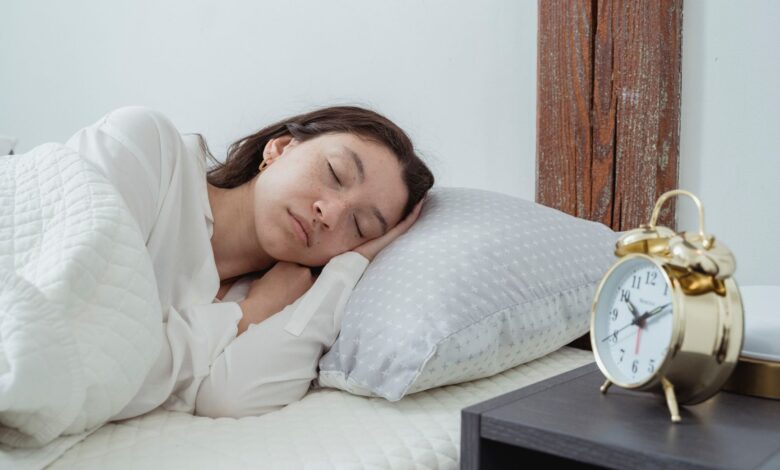
The most basic job of a sunrise alarm clock is to help people to wake up more easily in the morning by providing them with a natural source of light in a dark room. However, many people do not properly utilize the product. The sunrise alarm clock often ends up on the side of the bed that is farthest away from the user and therefore has little impact on the user during the nighttime hours. Consequently, many individuals believe that their sunrise alarm clock is ineffective. One Reddit user stated, “it wakes him ‘if it’s next to the bed and I’m facing it, but if I’m turned the other way I don’t even notice it.'”
So, the only real question regarding the effectiveness of these gadgets is not if they work but rather how much of the light is getting to the user’s eye at the distance from which the user will be when the alarm goes off. This guide will look at the measurements of the published studies of dawn simulation, as well as discuss what the ramp up to darkness at the time of awakening is believed to do. Additionally, we will look at how three different manufacturers have reported their brightness, how to check for brightness at the location of your pillow, and where a lamp does not provide sufficient daylight or sound. The information in this guide is geared towards adult users only.
Do Sunrise Alarm Clocks Work? What Dawn-Simulator Studies Measured
In some cases, there is evidence that a dawn stimulus can reduce morning grogginess for some adults, although this effect has been demonstrated in only a small number of studies, most of which assessed people’s feelings rather than their actual performance.
The most compelling results from Van De Werken et al. (2010) come from a laboratory study. Sixteen healthy adults reported that they had difficulty waking and spent one night with a 30-minute artificial dawn and one control night (the lights came on at the time of their waking). Following exposure to the artificial dawn, the participants reported feeling less sleepy and more “active.” However, no significant differences between the two nights in terms of performance, core body temperature, or cortisol concentration were observed.
Giménez and colleagues (2010) conducted an investigation in which the participants each used a commercially available dawn light in their homes. Each trial lasted two weeks and was based on a randomized crossover design. When comparing the effect of a simulated dawn to no dawn, it was observed that a simulated dawn at 250 lux reduced the self-reported time to feel fully awake by an average of 20 minutes. The 50-lux dawn improved one of the participant’s scores on a sleepiness-severity scale but the 11-minute reduction in the sleepiness-severity scale was not statistically significant. In a second study, participants chose their own target lux level, which was approximately 265 lux, and this resulted in an average reduction of 24.8 minutes. In both studies, there was no evidence for a shift in melatonin timing, which indicates that the morning grogginess benefit of simulated dawns does not come from resetting the body clock.
The third study by Thompson and colleagues (2014) utilized a smaller sample size of eight participants and reported improved subjective quality of sleep, increased alertness, and a slight increase in the number of correctly added integers (69.5 compared to 66.9) and decreased reaction time (0.81 seconds compared to 0.86 seconds) after a simulated dawn.
Taken together, the three studies sort like this:
- Supported, in small studies: feeling less groggy and more alert after waking.
- Mixed: objective performance (Thompson found gains; van de Werken did not) and cortisol (van de Werken found no effect).
- Not shown in the verified home study: shifting the body clock.
These studies do not address the time frame over which improvements will occur for users (i.e., how long can one expect to experience these benefits?). Opinions from users vary; for example, a post on Reddit stated, “I didn’t see a difference in the first month, but after that, it was a lot better,” while another person commenting on the same post stated that they had read about someone who had experienced results within a week, but their results faded shortly thereafter. These examples represent individual experiences and not necessarily an overall trend among people utilizing this method. As such, the method outlined later in this guide will require users to maintain records of their progress over a minimum of two weeks (in contrast to recording their experience on one specific day).
What Gradual Light Does in the Last 30 Minutes of Sleep
The van de Werken team proposed a mechanism, and it runs in three steps:
- A dim ramp begins while you’re still asleep in a dark room.
- More of the final 30 minutes before the alarm is spent awake or in light sleep instead of deeper sleep.
- You wake from that lighter state, and after you get up your skin temperature falls faster. The researchers link both effects to the lower sleepiness people reported.
According to the authors, this is an outline of a proposed mechanism—not conclusive evidence. This mechanism relies on one trial (16 participants) and should therefore be regarded as the most accurate at present but it is not (yet) settled science.
It is apparent from this reasoning that light must enter the eye in order to have a positive effect. Therefore, if you have a lamp placed far from your room, you must have light visible to help get you out of bed. Philips supports these conclusions in their troubleshooting guide — if an individual is having difficulty getting up late, it is recommended to ensure that the lamp is positioned at least at ear height and not blocked by items such as pillows or bedding. The HF3520 manual suggests checking that the lamp isn’t lower than your head and that the light isn’t blocked by your bed, duvet or pillow.
Philips goes on to say that “the sensitivity of our eyes to light is at its peak during the early morning hours,” and that low-lux illumination will prepare the body to rise out of sleep. Again, this is only the statement of the manufacturer and not backed up by scientific literature. While the grogginess seen above was seen within studies, this was only a small portion of the population tested, and no study has examined this group of individuals who slept on their side or were under the covers, or sleeping in a sleep mask or covering them up in a blanket.
Wake-Up Light Comparison: Peak Lux at Distance, Ramp Minutes and Backup Alarm
Each manufacturer presents brightness metrics differently, making it impossible to directly compare their top-level brightness data with each other. Philips lists the number of lux at a specified distance from the source. Lumie indicates that it doesn’t “normally measure the Bodyclock in lux” and instead provides an approximate lumen rating of around 350 lumens. In Lumie’s FAQ, it states that if you only have a lux measurement and not the distance at which to measure that number, it holds no meaning in context. For Hatch products, there are no lux measurements provided, only brightness settings available through the app (links below).
The table below was created from information supplied by each manufacturer (including independent readings for comparison purposes), based upon the documentations as of October 2026, so always check back with the actual manufacturer pages before purchasing.
| Spec | Philips SmartSleep HF3520 | Lumie Bodyclock Shine 300 | Hatch Restore 3 |
|---|---|---|---|
| How the maker states brightness | Approx. 1–300 lux, 20 levels | About 350 lumens (FAQ); “adjustable sunrise intensity“ | Brightness set in the app (alarm guide); no lux figure found |
| Distance given with brightness | 45 cm (17.7 in); placement advice 40–50 cm (16–20 in) | None | None found |
| Independent reading at 46 cm (18 in), from another publisher | 280 lux | 360 lux | 285 lux |
| Sunrise ramp | 20–40 min, default 30 (manual) | 15–90 min (product page) | 5 min to 1 hour, according to a Hatch staff reply |
| Light color | Approx. 1,500–2,800 K | Warm white, orange and red LEDs (no K value given) | Named sunrise color sequences in the app (no K value found) |
| Wake sound | Natural sounds or FM radio; sound fades in (manual) | 15 sounds plus FM radio | Plays after the sunrise; a user relays Hatch support saying alarm sounds now run for 1 hour unless turned off |
| Alarms and snooze | 2 alarms; tap to snooze, sound returns after 9 min, lamp stays on | Daily or weekly alarms; tap-to-snooze | Multiple app alarms; tap the top button to snooze for 9 min |
| Power cut and connectivity | Clock time kept up to 8 hours in a power failure; no app | No app needed; power-cut behavior not stated on the pages linked here | Hatch says a Wi-Fi network is required; a Hatch support rep said the alarm won’t sound in a full power outage |
| Maker’s trial and warranty | 90-day money-back; 2-year warranty | 45-day trial; 3-year warranty | 30-night trial; 1-year warranty |
A few notes regarding the chart: the Philips manual indicates that if there is a power outage of up to eight (8) hours, the clock time will be preserved. It does not indicate whether or not the lamp or alarm will continue to function during the power outage, so do not assume that they will. The independent readings were taken from a publisher’s spectrometer with known units, and do not represent the manufacturer’s stated specifications. However, there is a fair degree of consistency shown between Philips’ independent reading of 280 lux at 46 cm and the stated reading of 300 lux at 45 cm. All three manufacturers do not list alarm volume (in decibels). Additionally, the Sleep Foundation states that their Hatch trial is for 60 nights; however Hatch’s own website lists their trial for 30 nights. Always verify with the manufacturer before purchasing any of these products.
How to Check a Light Alarm Clock’s Brightness at Your Own Bed Distance
Distance quickly robs brightness from the Shine 300. Testing done by an independent lab revealed the following results with the Shine 300 set to full intensity: 362 lux at 46 cm (18 in), 220 at 61 cm (24 in), 150 at 76 cm (30 in) and 110 at 91 cm (36 in). Therefore, placing your light alarm clock on a dresser at the back of the room results in you experiencing only a fraction of the brightness advertised on the box.
An app on your smartphone that measures lux can help you determine how bright the light is, but it will only give you a rough idea of the brightness. In one study, researchers tested 11 smartphones and six apps to determine how well smart phone readings matched laboratory readings. They noted in the study that iPhones tended to under-read light levels and that Android phones tended to over-read, with 98.3% of readings taken on Android phones off by more than 100% when compared to laboratory standards. A second study done by citizen scientists suggested that calibrated phones would be accurate to ±12% when measuring lux levels exceeding 5,000, but would be significantly worse below 3,000 lux, which is the measured range of wake-up lights. Therefore, don’t use a phone to determine a lux level; instead, use just one phone, one application, and one position to make measurements and to compare them.
- Measure the distance from the lamp to where your eyes rest on the pillow, in cm and inches. For comparison, Philips recommends 40–50 cm (16–20 in) from your head.
- Put the phone’s light sensor at eye position, facing the lamp. Note the phone model, operating system and app.
- Run a full sunrise, not just a demo. The HF3520’s 90-second demo shows the ramp, but only a full ramp shows how fast the light builds.
- Take a reading every 5 minutes until the sound starts.
- Repeat with the sensor facing away from the lamp, and again at a partner’s pillow if you share the bed.
- Keep a two-week log of whether you woke before the sound. Fourteen mornings fit inside each maker’s trial window.
| Minutes before alarm | Reading facing lamp | Reading facing away | Partner’s pillow | Woke before sound? |
|---|---|---|---|---|
| 30 | ||||
| 25 | ||||
| 20 | ||||
| 15 | ||||
| 10 | ||||
| 5 | ||||
| 0 (sound starts) |
If the readings taken with the phone facing away from the lamp are significantly lower than the readings taken with the phone facing the lamp, you may be able to explain the days you didn’t receive the expected results from the lamp. If you find yourself unable to wake with the light, try moving the lamp closer to where you sleep, or raising the lamp to the level of your head before giving up on the light entirely.
Wake Light vs Window Light: Where a Lamp Falls Short
By using the same mobile device to determine how your lamp compares to natural daylight, you can see how your lighting needs change over the course of a dark season. To illustrate this, compare your lamp’s reading from where you would normally find yourself sleeping on a dark season morning to that of what you would find outside at the same time of day after the sun rises. Because it will be the same mobile device, you can rely on the ratio between the three numbers to help determine how much light you need to get from your lamp.
For a rough sense of scale, Engineering ToolBox lists typical light levels. These are general reference values, not measurements from your room:
- Twilight: about 10.8 lux outdoors.
- Overcast day: about 1,075 lux outdoors.
- Indoors near a window on a clear day: about 1,000 lux.
By those figures, a wake light giving roughly 280–360 lux at 46 cm (18 in) is far brighter than twilight but well below daylight. It’s a waking cue, not a substitute for daylight.
PLOS Biology (Brown et al., 2022) provides a measurement for light targets based on a different measure of light than ordinary lux values, for example: 250 lux melanopic equivalent versus 250 lux bright light at the eye. These recommendations specify at least 250 lux as the required minimum during daylight hours or within 3 hours of bedtime (i.e., at least 10 lux in your home), and only 1 lux in your sleep environment. Additionally, there are recommendations for cooler or “bluer” lights during daytime hours – at least 1,500 K. However, a 1,500-2,800 K wake light will provide a different effect than full-spectrum daylight; comparisons with these manufacturer’s data did not produce any accurate conversion values. Therefore, one interpretation of the overall PLOS consensus is that using a dark room overnight and experiencing actual daylight upon waking has a greater effect than just using the lamp by itself.
A few individuals have chosen not to use the traditional clock. A user of reddit programs a cheap smart bulb to perform the same function. An additional user reported that, when their smart bulb starts ramping up on the side of the bed, they are awakened approximately 5 minutes before their phone alarm actually goes off. Apps that claim to simulate a sunrise with phone screens do not have the necessary data to verify this. The tester referenced earlier did not perform tests on every phone and estimated a phone screen will deliver approximately 50 lux at 8 inches from the user’s face.
Sunrise Alarm Clock vs Regular Alarm: When Light Alone Won’t Wake You
When comparing a sunrise alarm clock with a regular alarm, the real question is whether light can do the waking for you, or only make it gentler. User reports differ widely. One Reddit poster said the light works for his girlfriend and does nothing for him. Another set the Hatch to a 30-minute sunrise at 100% brightness, about 30–46 cm (12–18 in) away, and slept through it until his backup alarm. The Philips manual supplies most of the adjustments:
- If the sound wakes you most mornings, Philips advises raising the light intensity or lengthening the sunrise time.
- If you wake too early or with a headache, lower the intensity, shorten the sunrise, or both. If the lowest level is still too strong, move the lamp farther from the bed.
- If you sleep facing away or under the covers, check your facing-away readings from the log. Philips’s “wakes me too late” guidance points to light blocked by bedding or a lamp set too low.
- If your partner wakes, Philips says a bedroom partner may wake from the light even when farther from it because sensitivity differs between people. One user’s partner wears an eye mask. Another Hatch owner says a one-hour alarm sound wakes his wife on days he gets up before it.
- If you’re a heavy sleeper or a morning really matters, keep a separate sound alarm. The Sleep Foundation advises heavy sleepers to choose a clock with a sound-based backup alarm. One Hatch owner who lost power before dawn now sets a phone alarm 15 minutes after the Hatch alarm.
Your two-week journal will provide you with the information you need to make your own decision. If you were able to wake up before the sound alarm on most of the 14 days, it would be reasonable to conclude that you could wake up using the light and then follow up with sound. If you were rarely able to wake up prior to the sound alarm, you should use the light as a softening factor for waking and rely on sound to wake you up.
Sunrise Alarm Clocks for Winter Mornings: Easier Waking, Not a SAD Treatment
The most practical use for a sunrise alarm clock during the colder months is when it is necessary to awaken before sunrise. The following information comes from one reviewer at Best Buy who struggles with early morning awakenings in the winter months; they reported that the sunrise feature actually wakes them before the alarm clock rings. However, this is based on only one reviewer’s experience, and the possibility of waking up easier with a sunrise alarm clock is supported by the research provided in this guide.
Evidence regarding seasonal affective disorder (SAD), on the other hand, is mixed and inconclusive. In Avery and colleagues’ 2001 research trial involving 95 participants with SAD, researchers found that a light that simulates a 1.5 hour dawn, peaking at 250 lux, produced significantly higher rates of remission and response, than both a dim red placebo light and the light box set at 10,000 lux. A 2005 meta-analysis concluded that dawn light simulation had a moderate positive effect size of 0.73 (95 percent confidence interval 0.37-1.08). It is important to note that all of the dawn simulation studies included in this paper came from a single research group and that only 23 out of a total of 173 articles screened met the authors’ inclusion criteria. The National Health Service (NHS) also states that “There is presently insufficient evidence to demonstrate whether light therapy is effective, therefore it is not usually available through the NHS”. Therefore, a wake-up light should not be considered a treatment for SAD.
When to talk to a professional: The NHS advises seeing a GP if you think you might have SAD, or if SAD treatment isn’t helping. It also advises speaking to a GP before trying light therapy, because it may not suit people with certain eye conditions or those taking medicines that increase sensitivity to light. In the US, the equivalent first step is your primary care provider.
The manufacturers of these sunrise alarm clocks have provided their own warnings. Philips, for example, advises that a person should talk to their doctor before using a sunrise alarm clock if they’ve experienced or are currently suffering from depression, and that the product is not to be used as an alternative to obtaining sufficient sleep. Lumie provides similar guidance with respect to the device’s relationship to depression, as noted in the Shine 300 instructions, which also caution users to consult their doctor before use if they have, or have had, depression.
The information in this article is intended for informational purposes only and should not be taken as actual medical advice.
What to Look For First
When comparing a dawn simulator alarm clock, three elements should be considered in the following order:
First, the amount of light produced by the lamp from your distance from it, because the intensity of light decreases rapidly as the fixture is moved away. When selecting a product, you should find a manufacturer that provides a light output measurement and the distance or measure from your pillow, or you can perform the pillow check mentioned above.
Second, you will want a product that has adjustable ramp up and peak level settings. The guidelines provided by Philips regarding waking too early, too late, and/or experiencing headaches are only beneficial if the settings are adjustable.
Third, you should find out how the sound fades in and what will occur in the event of a power failure, as well as whether or not you need Wi-Fi for your clock. The table provides information on how these three manufacturers handle the sound and power function.
Whichever dawn simulator alarm clock you choose, be sure to also have a backup alarm system for mornings when you really need it! If you suffer from seasonal affective disorder, talk to your doctor/primary healthcare provider for assistance rather than depending solely on the use of a lamp to assist you through the winter months.
FAQ
Which is more important, ramp length or peak brightness? Either can be increased or decreased, and Philips pairs them together: when you keep waking up at night, increase either; when you wake up too early, decrease either. In Giménez’ study, 250 lux (bright dawn) decreased the length of time it took for Participants to wake up significantly.
Should I have an app/Wi-Fi to use this? The answer is maybe, depending on which model you have. The Philips and Lumie units are set directly on the device itself; Hatch claims to need a Wi-Fi network, which limited one Best Buy reviewer while traveling in hotels.
Can I turn the sound off and wake to light only?
Hatch lets you toggle the sound off for an alarm. Whether light alone is enough is what the two-week log is for.
