
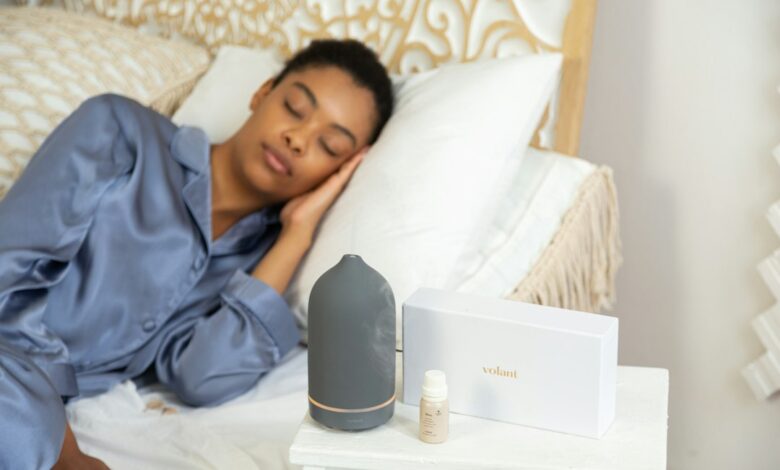
If you have ever drifted off while listening to a soothing white-noise sound, you might consider whether a more pleasing tone (soft or deeper) would also work for you. Unfortunately, current research shows no clear winner between different sound “colors.” Rather, for many individuals, steady sounds serve primarily to mask unexpected noises; thus, deciding between white-noise vs. pink-noise for sleeping is more about your individual needs and preferences than it is about which one is superior overall.
Although much of the existing research suggests that pink noise played alone at 50 dBA may reduce the amount of REM sleep, some studies indicate that adding sound may also shorten the length of time it takes to fall asleep. Therefore, all of the general information contained herein is provided for educational purposes only, and should not be construed as medical advice or a treatment protocol for a specific sleep disorder. The labels given to the different sound “colours” are often not accurate representations of the type of sound they produce, so while these labels may help you understand how the various sounds affect the human brain and body, consider them a general guideline, not an absolute rule.
White, Pink, and Brown Noise: How They Differ
Broadband noises are classified as random noise over a large number of varying pitch levels. The primary difference among these noises is the way that their distribution of energy between high and low frequencies varies. According to Stanford University’s text on Signal Processing, pink noise and brown noise can be thought of as filtered forms of white noise. With pink noise, as frequency rises, the amount of energy versus that frequency decreases in a manner proportional to the inverse of the frequency. With brown noise, the amount of energy versus that frequency decreases in proportion to the square of the inverse of the frequency (1/f²), which emphasises the lower end of the frequency scale much more than pink noise. Theoretically, white noise has an equal distribution across all frequencies; however, in practice white noise can only be produced within certain limited frequency bands.
| Name | How the energy is spread | How it tends to sound |
|---|---|---|
| White | Equal power at every frequency | Bright, hissy, like steam or static |
| Pink | Power falls as 1/f, so each octave gets equal power | Lower and softer than white |
| Brown | Power falls as 1/f², strongly weighted to the bass | Deeper rumble, like distant surf |
The audio description of both white and pink noise is based upon the systematic literature review published in 2021. The authors define white noise as a “hissing sound”, while pink noise is described as being “lower and deeper” because more relative energy exists in the low-frequency range than in the mid- to high-frequency ranges. The brown noise description is a conclusion based upon the steeper slope of pink noise, but no actual listening study has been undertaken for comparison. The same review also highlights that the term “white noise” is commonly used to refer to sounds produced by devices such as fans, air conditioning units, etc., that may actually be producing sounds which sound similar but are in fact pink or some other filtered version of broadband sound.
There are also problems with labelling the opposite as white noise. In a 2026 trial in older adults, a series of river, forest, rain and waves was labelled as white noise. In a hospital study from India, the authors compared tracks of white, pink and brown noise with those of a fan, ocean waves and steady rain. Therefore, an audio track consisting of a mixture of “natural” sounds may or may not represent a true broadband simulation of either white, pink or brown noise.
The quality of your hardware is equally important. For example, one reviewer of a budget sound machine indicated that the sound quality of the speaker was “noticeably lacking” in bass, and he stated that the tone of the brown noise “just doesn’t really sound deep enough.” This particular customer’s experience with one sound machine is not representative of all kinds of small speakers; however, it does provide an insight into why simply selecting “brown” from the menu doesn’t always guarantee that the result will be a deep sound. If you’re looking for a deep sound, you should evaluate the actual output at your pillow rather than the name of the button.
What Sound Masking Can—and Can’t—Do for Sleep
Masking is the main reason added sound might help. The 2021 review defines masking as the process by which “the threshold for hearing one sound is raised by the presence of a masking sound.” The same review notes that the chance of your body reacting to a noise during sleep rises with how loud it is. Steady sound shrinks the gap between the background and a sudden noise, such as a door slam or a passing truck, so that noise stands out less.
It should be noted that masking does not eliminate noise from the environment. Therefore, while earplugs, closed windows, and quieter sound sources reduce the decibel level of environmental noise, they do not replace the loss of sound energy introduced into the environment by adding sound. The differences between these two methods of providing sound energy into the environment are evident in the 2026 sleep laboratory study. For the event-by-event analysis conducted in the trial of 25 participants, adding pink noise to external sounds significantly reduced the occurrence of being disturbed or awakened to aircraft and other external noises and even more so when the pink noise level was the highest. In comparison, results showed that earplugs provided a better outcome than both of the pink-noise levels.
Finally, while fewer disruptions in response to individual noise sources do not translate into improved overall quality of sleep for each night. As presented in the primary report from that same trial, the presence of pink noise along with environmental noise created a negative change in overall structure for the sleep experience, even though it did have some beneficial effects on reduction of sleep fragmentation. A separate pilot study from Sweden had similar outcomes. Continued exposure to pink noise at 45 dB blunted the brain’s response to events related to surface traffic for 12 healthy young adults. However, during the nights that consisted of pink noise as well as surface traffic, the participants recorded nearly the same number of arousals as occurred during nights with only surface traffic, and they rated their overall sleep quality and depth lower when compared to nights without pink noise.
In addition to blocking out sounds you don’t want to hear, masks can block out some of the sounds you do want to hear as well. According to the analysis of Sleep Health, pink noise and particularly using earplugs when sleeping decreased peoples’ likelihood of being disturbed due to either the sound of a fire alarm or a crying baby. As such, you could classify this as “problematic in instances where attention must be drawn to it.” The 2021 review cited the same issue and raised concerns over the potential impacts on sleep/wake cycles and hearing capabilities if the volume is excessive.
Does White, Pink, or Brown Noise Help You Sleep?
Individuals who request assistance in determining whether or not white noise helps individuals sleep typically expect a binary outcome; however, the cumulative body of research consists of a much narrower answer. A [systematic review of 38 studies](https://europepmc.org/articles/PMC9163611) yielded a wide array of findings ranging from enhanced sleep to negatively impacted sleep; the quality of evidence that non-stop sound (for the purposes of helping one sleep) is “very low” under the GRADE criteria. A second systematic review evaluated 34 studies on adults and concluded that, overall, there was “no compelling evidence” for sound stimulation. However, the review stated no studies had documented any adverse effects with the short-term use of auditory stimulation.
In addition, the second systematic review found a greater number of positive studies involving pink noise (9 of 11) than there was for white noise (6 of 18). The percentages of positive studies differ due to differences in study populations, settings, and methodology; therefore, comparisons of the colors cannot be made. Here’s how some of the individual studies compare:
| Study | Who and how many | What was played | What it found and didn’t |
|---|---|---|---|
| Messineo 2017 | 18 healthy adults, lab, randomized crossover | Room-filling filtered broadband sound, 46 dB vs 40.1 dB ambient | Time to stage 2 sleep fell from 19 to 13 min (median); no change in overall sleep architecture or group sleep-quality ratings |
| Ebben 2021 | 10 adults in noisy NYC homes, one-week phases | A white noise machine | Less wake after sleep onset on actigraphy, shorter diary sleep latency; not randomized |
| Warjri 2021 | 54 hospital patients, quasi-experimental | White, pink and brown on days 1, 2 and 3 via earphones | Better self-rated sleep than controls each day; fixed day order can’t rank colors |
| Basner 2026 | 25 healthy adults, 7 lab nights | Pink noise at 40 or 50 dBA, with and without environmental noise | Pink noise alone at 50 dBA cut REM by about 19 min vs quiet |
| Vincens 2026 | 12 healthy young adults, 5 lab nights | Pink noise at 45 dB | Softer brain responses to traffic events; no whole-night benefit; worse perceived sleep |
| USleep 2026 | 495 working adults, 4-week randomized trial | App library of music, nature sounds, and white and pink noise | Not significantly better than an active app control on self-reported sleep disturbance |
A few patterns hold across the table. The clearest positive signals are about falling asleep or waking less often in noisy or sleep-challenging setups. Messineo’s group made bedtime 90 minutes early to mimic short-term insomnia. Ebben recruited people bothered by city noise. Neither tells you what added sound does in an already quiet room. Both were also funded by device makers. Messineo’s trial was supported by Cambridge Sound Management, and Ebben’s was partially funded by Marpac.
There is not much research at this time on brown noise related to sleep. The reason for this is the Warjri protocol performed by the hospital included brown sound; however, it was only introduced on day 3 of the protocol and therefore, any effect of the brown sound may be confounded by the fact that they have now been in the hospital for 3 days. The research results from studies of brown noise included in this paper do not support any adult sleep benefit from the brown sound as compared to any other colors.
With regard to pink noise for sleep, this has the most recent, controlled laboratory evidence, and the evidence points in several different directions. The trial conducted by Basner used a night with only pink noise compared against a night spent listening to quiet, calibrated noise at ~ 24dB. The participants in this study were young, healthy individuals that had not had a sound sleep experience. The authors of this paper do caution that the effect documented within their study may not be replicated when considering the use of white noise, sound levels other than 24 dB, and long-term use of any sound.
Thus, based on the information current to this time, the best sound for a person to sleep with is not a specific color of sound. If the addition of a sound helps a person sleep at all, most likely, it is due to the sound serving as a mask for surrounding intermittent noise that they would otherwise be unable to control. Whether or not the addition of sound is worth the expense and inconvenience of adding more sound to a person’s sleeping environment will depend both on the person and the sleeping environment.
Why Timed Pink-Noise Stimulation Is Different From a Sleep Track
Most studies investigating the sound of pink noise and its relationship to deep sleep do so in a very different manner from a bedside speaker. The study that will be discussed in this article is a 2017 study that involved 13 older adults between the ages of 60 and 84 and was conducted in the laboratory. In this study, pink noise was presented in bursts of 50 milliseconds (0.05 second) at intervals of five bursts. The timing of the pink noise was controlled by a computer and the timing of each burst was based on live records of brain activity and was synchronized to the rising phase of the large waveform.
The average increase in recall of word pairs following stimulation nights was nine (9.2) more than after sham nights. The amount of slow-wave activity during the entire night was not different between conditions. The quality of sleep, the quality of the mood and how well alert the individual felt did not change between the two conditions.
Other studies are even more complicated than the above-mentioned example. In the study of eight adults with 8 adult subjects, conducted by a professional sleep technologist who observed the recording live, the researcher presented the same pink-noise stimuli while the subjects were in non-REM sleep but did not synchronize them to the brain-wave recordings of the subjects. The amount of deep N3 sleep was found to have increased. Sounds that were purposely disruptive led to bursts of slow-wave activity, however, these disruptive noises because of the effect they have on the sleep quality and reduced alertness on the following day. The authors of this study recommended that the primary focus of any sleep treatment should be to provide continuity to one’s sleep.
When conducting a continuous pink-noise experiment in a home setting, the findings were once again different. An experiment conducted in 2023 with 72 participants found that pink noise presented without synchronizing the presentation to the brain-wave recordings did not improve the ability to solve tasks that required insight. In fact, it was observed that open-loop pink noise resulted in a decrease in the amount of time spent within the first phase of light sleep. This does not mean that pink noise is detrimental to the ability to create new ideas or solve problems. However, these results indicate that the memory results from the laboratory should not be interpreted as a reason to play pink noise continuously through the night.
What the newer brain-fluid study adds
The article “Timed Sound and the Cerebrospinal Fluid Response” was published in September 2026 in Science Translational Medicine and has been referenced in this context due to its finding of a relationship between timed auditory stimulation and cerebrospinal fluid. This study employed a method of closed-loop auditory stimulation conducted within an MRI machine, producing a change in cerebrospinal fluid flow as a result of the timing of auditory stimulation relative to the slow-wave peaks. In contrast, the study’s authors presented their findings as a tool for further exploration in clinical settings; however, the study did not demonstrate a biological cleansing of the brain or protect against disease, nor was the brain benefited from utilizing timed auditory stimulation in a streaming format. The only way to achieve the desired effect was through using specific timing correlated with slow-wave peak activity, which is something that standard machines and apps do not do.
Sleep Sound Volume, Placement, and Timers: What to Check
There has been no definite “ideal” setting for an adult’s white-noise machine. The various research articles mentioned above evaluated multiple settings, types of locations, and measures of success. All of the studies failed to evaluate a large variety of sound levels to determine what the “best” sound level would be. What these studies can help you with is providing a guide. This list should be viewed as a practical “how to” guide, not as a method of therapy.
- Start low and stop once the problem sound fades into the background. Masking only has to bring the gap between steady and sudden sound down far enough. The lab studies used roughly 40 to 50 dB at the sleeper’s position, and the 50 dBA pink-noise night was the one linked to lost REM. Treat those numbers as research conditions, not targets.
- Judge the level where your head is, not next to the machine. Researchers calibrated sound at the sleeper’s head or 10 cm above the pillow because that’s the actual exposure. WHO notes that sound gets weaker as you move away from the source. No study opened for this article sets a validated minimum distance for adults, so moving the device mainly helps you find a lower level at the pillow.
- Treat phone meter readings as rough estimates. The NIOSH sound level meter app claims accuracy within ±2 dBA and is iOS-only. It meets Type 2 requirements only with a calibrated external microphone. NIOSH says it can’t currently verify the accuracy of an Android app. A quiet-bedroom reading from a phone is a useful clue, not a lab measurement.
- Don’t read a volume percentage as decibels. In the older-adult trial, phones at 50 to 60% volume at 1 m (about 3.3 ft) were meant to approximate 40 to 50 dB. Output wasn’t measured, and it varies by device. One reviewer measured a small machine at 77.3 dBA from one meter on a loud setting, so even budget devices can go far louder than the lab levels.
- Don’t borrow hearing limits as sleep targets. WHO’s safe-listening guidance puts 80 dB at up to 40 hours a week. The NIOSH limit of 85 dBA over 8 hours is occupational, and NIOSH says it “is not a recommendation” for the general environment. Both are about protecting hearing. Pink noise at 50 dBA was far below either and still changed sleep structure, so hearing-safe doesn’t mean sleep-neutral.
- Choose a timer based on your problem. If you struggle to fall asleep, a timer limits how long the sound plays. If traffic or neighbors wake you at 3 a.m., a timer that has already shut off won’t mask anything. Some machines offer fade-out timers of one to four hours. No study opened for this article compared timer lengths, so this is a trade-off, not a proven setting.
- Listen for loop seams at your sleeping volume. A track with an audible restart brings back the kind of sudden change that masking is supposed to smooth out. One reviewer timed track loops at one to four minutes on a budget machine. Whether a non-looping generator sleeps better than a smooth long loop hasn’t been tested in the controlled studies here.
- Check that you can still hear essential alarms. Masking noise and earplugs both reduced arousals to a fire alarm in the lab. With your usual sound playing, have someone press your smoke alarm’s test button while you lie in bed, and confirm it’s clearly audible.
If you are experiencing any ongoing symptoms such as ringing in the ears, trouble listening to others or following conversations, the WHO recommends that you have your hearing checked. Until then, it is a good idea to keep the volume of the sound down as well.
Choosing Between Sleep Sounds, Quiet, and Earplugs
Figure out what has you awake. If your room is silent and you prefer to have some kind of white noise in the background, then that’s your preference, but don’t expect white noise to improve your sleep. The best advice from NHLBI regarding how to obtain a good night’s sleep is to make sure your bedroom is quiet, dark and cool. You do not need a background noise in order to have a good night’s sleep.
Controlling outside noise is different from controlling indoor noise because the evidence generated from studies highlights favoured reduction of noise over masking of noise as the best course of action. The use of standard foam earplugs reduces the sound levels by an average of 25.5 dB and essentially eliminates all of the negative effects environmental noise has on our sleep. The effectiveness of standard earplugs starts to decrease during events that create noise levels greater than 65 dBA. Standard foam earplugs also act to lower our alarm response, and in the Basner trial, earplugs were comfortable to healthy young volunteers; that tells us nothing about comfort of all other people. As such, in our guide for choosing sleep earplugs, we provide information concerning both fit and noise-reduction ratings.
There are still some scenarios in which using a sound mask, instead of a white-noise machine is appropriate: If the use of earplugs is physically uncomfortable; If you will need to be able to listen/monitor your environment to some degree; If it’s impossible to reduce the sound that is causing sleep disturbance. In these cases, use the quietest sound that works for you and choose whichever sound you are able to easily ignore. For example, in the Bassless White Noise Machine Reviews, the reviewer who preferred the running water sound had less issue with the absence of bass because of this. The comfort of the sound is just as valid a reason for choosing a particular sound as long as the sound source and comfortableness of the user isn’t associated with better sleep.
No one sound setting can resolve all sleeping issues. If you are having difficulty falling asleep, according to the NHLBI (National Heart, Lung, and Blood Institute), talk to your doctor.
The Bottom Line
Research has shown that no specific noise color will improve sleep quality for adults; however, the use of steady-state sounds may assist in masking unexpected or abrupt noises occurring within pre-existing noisy environments. For individuals utilizing steady-state sounds, they should utilize the lowest level of sound required for adequate masking of the unwanted noise, test it at their pillow location, and confirm that alarms will still be detected. Recent laboratory testing has indicated that continuous pink noise may have a negative impact on the amount of time spent in REM sleep and increase a person’s perception of having quality sleep despite a reduction in noise response. Steady-state sound production should be viewed solely as a method of improving sleep by masking external noise for research purposes; however, do not consider them as a free upgrade.
Frequently Asked Questions
Is a rain or ocean track the same as pink or brown noise?
While nature sounds contain a range of frequencies, the label does not guarantee that they have a uniform spectral composition. In a 2026 laboratory study, recordings of rivers, forests, and rain were considered as white noise. Additionally, the type of speaker you use will affect how you perceive these sounds.
Can a sound machine drown out a smoke alarm?
Playing noise through an audio machine may lead to fewer responses to stimulation, although pink and especially earplug noise resulted in fewer arousal responses to a fire alarm in a 2026 laboratory test. It would be advisable to try to test the alarm in your bedroom with your normal sound environment.
Is a phone decibel app accurate enough for a bedroom?
An app provided by NIOSH can be utilized to provide a rough estimate of sound levels, although it is restricted to iOS-only devices. The app provides an estimate of ±2 dBA, but can only meet NIOSH Type 2 standards with a calibrated external microphone, so you should treat readings taken in a quiet room as an estimate of the actual sound level.
Should the sound run all night or shut off on a timer?
Some individuals may benefit from a time delay in the use of masking before bed, however, due to the reduction in stimulus exposure, those using a timer may not benefit from continued use after the initial period. Laboratory studies where sound was provided for the full eight hours of sleep period have found some negative side effects associated with this method of sound use.
Does a looping track matter?
Audible seams in masking sound can reawaken individuals experiencing sudden changes, which is counterproductive to the purpose of sound masking. Therefore, the best way to understand the benefits of sound masking is to listen to them at your intended sleeping volume. Controlled studies have not demonstrated that non-looping generators improve sleep compared to a long loop of smooth sound.
